.png&w=256&q=75)
The paradigm shift provided by Large Language Models (LLMs) with seemingly human-like capability to comprehend and interact has got businesses embedding AI into their core strategies, processes and systems with investment continuing to flow unabated with the global market projected to surpass $65 billion in 2024.
As more and more LLMs evolve leveraging technologies like fine tuning, retrieval augmented generation, specialized knowledge graph models in different vertical domains (finance, healthcare etc), multi-model input processing and the like, we now have the specter of these models not only understanding humans but converting human instructions into action.
The next evolution of Generative AI is moving beyond understanding and responding to users toward taking intelligent actions across systems, applications and workflows.
Large Action Models (LAMs)
LLMs form the genesis of models which extend their capabilities to include actions like we do in our day-to-day work. These models called LAMs are based on neuro-symbolic AI, combining symbolic AI using pre-defined rules and logic for solving problems with neural networks which discern patterns from data.
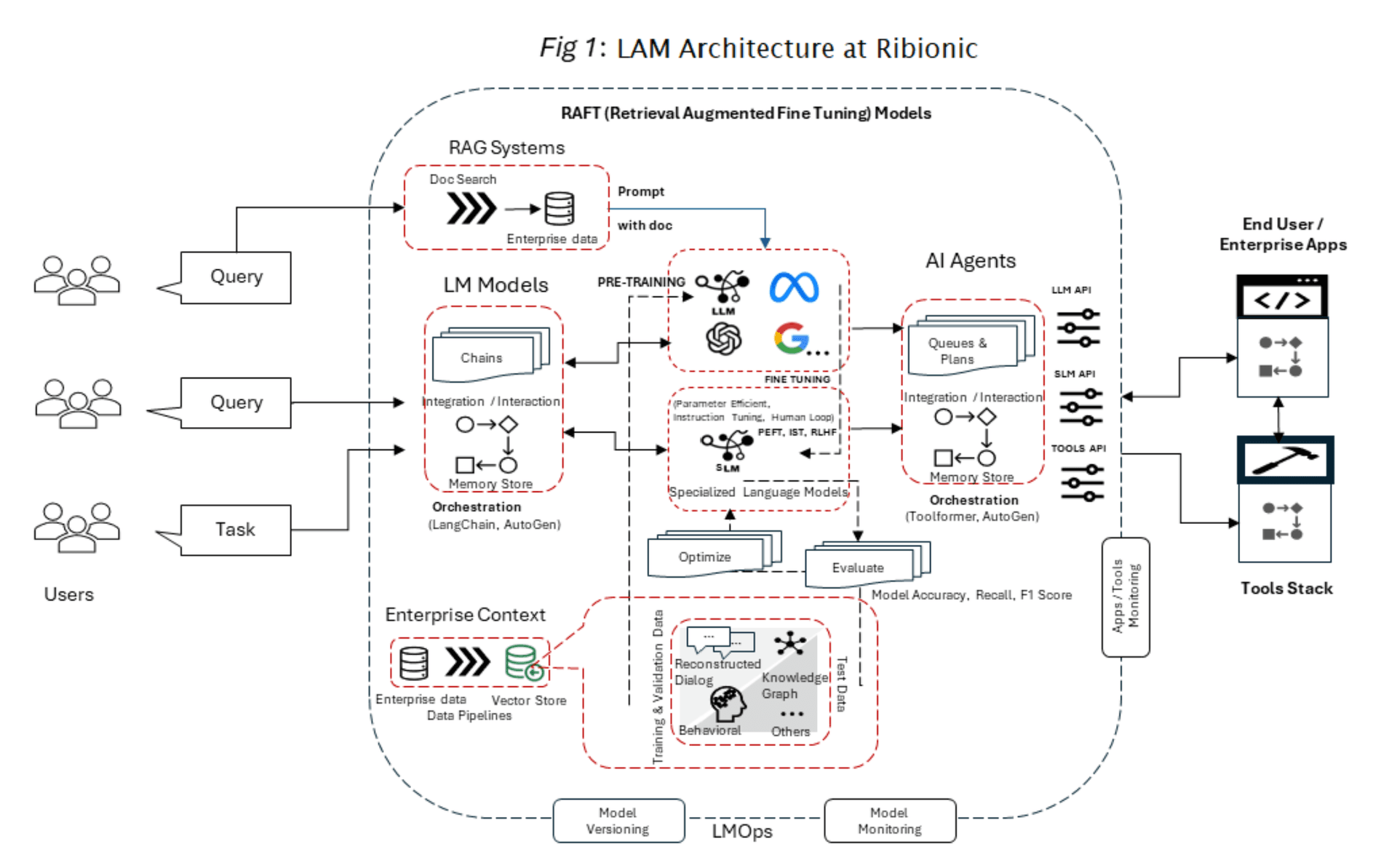
In this model the user can outline tasks to be performed and not just query for inputs. Tasks from end users are converted into prompt chains or chain of thoughts (CoT) by LLM / SLM (small / specialized language models) orchestrators (LangChain etc) with large models accessible to them.
These specialized action models have proliferated in multiple domains offering vertically integrated solutions. With the advent of models like Toolformer from Meta, as part of another orchestrator they channel the language model outputs to drive actions through tools on applications.
In healthcare domain such timely actions may just be the difference in saving precious lives. In a way it is an extension of AI agents by making tool interaction more generic than specific.
In short, these LAMs are essentially evolved AI agents with a combination of tools and chains of LLM calls with some prompt engineering. They can then decide which tool they need to use to accomplish a specific task.
In the deployed state, LLMOps are leveraged to continuously evaluate and optimize these models wherein measures like model accuracy, hallucinations, F1 score, recall and other indicators are employed as shown in Figure 1 above.
The Next Frontier
However, there is a limitation while using tools if an application does not have an API or one needs to use a new platform for say, booking flight tickets.
What if the LAM can automatically discover the platform leveraging its UI (user interface) without going into the complexity of integrating through APIs?
This revolution heralded by Rabbit AI, is now trying to automatically understand and discover application user interfaces enabling them to interact with them like humans.
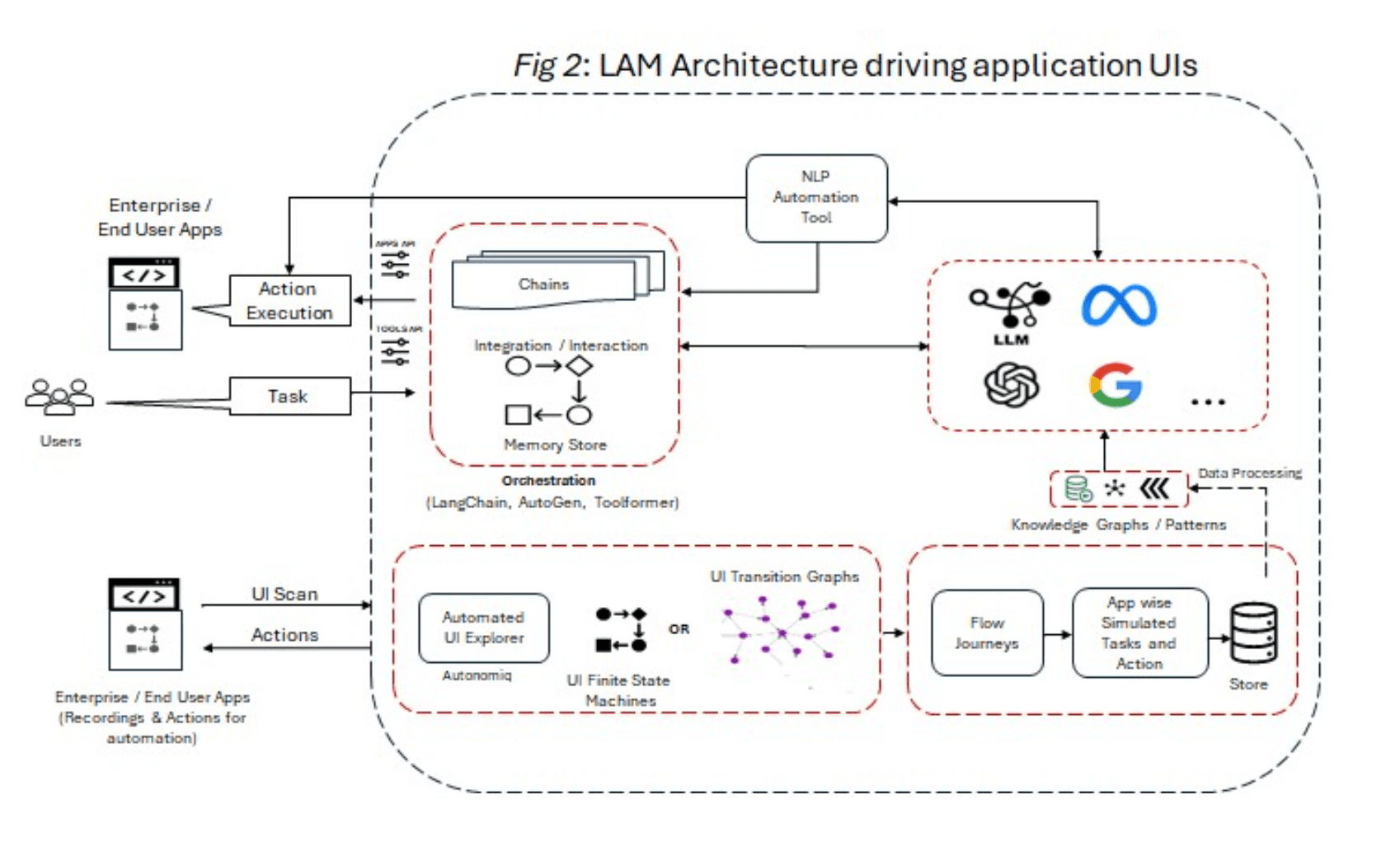
AI agents (or LLM agents) have for some time been driving specific workloads in organizations. However these UI-enabled LAMs immensely enhance their scope to potentially cover applications across the enterprise bringing in an era of autonomous LAMs.
Another revolution foreseen is the ability of end-user devices, industrial IoTs, applications and systems communicating in natural language themselves, leading to NLP-driven interfaces democratizing technology with LAMs leading the way.
Business Use Cases
In terms of application areas for LLMs, industry has so far got the biggest leverage from chatbots and enterprise search. LAMs open several business use cases, especially in customer support.
- Customer Support – Client problems can be replicated and solved quickly and interactively. Ticket lifecycles can drastically reduce while automating troubleshooting manuals, knowledge bases and user support processes.
- Personalized Marketing Campaigns – LAMs can leverage behavioral modeling to understand customer preferences and behavior, creating targeted campaigns that lead to higher conversion rates.
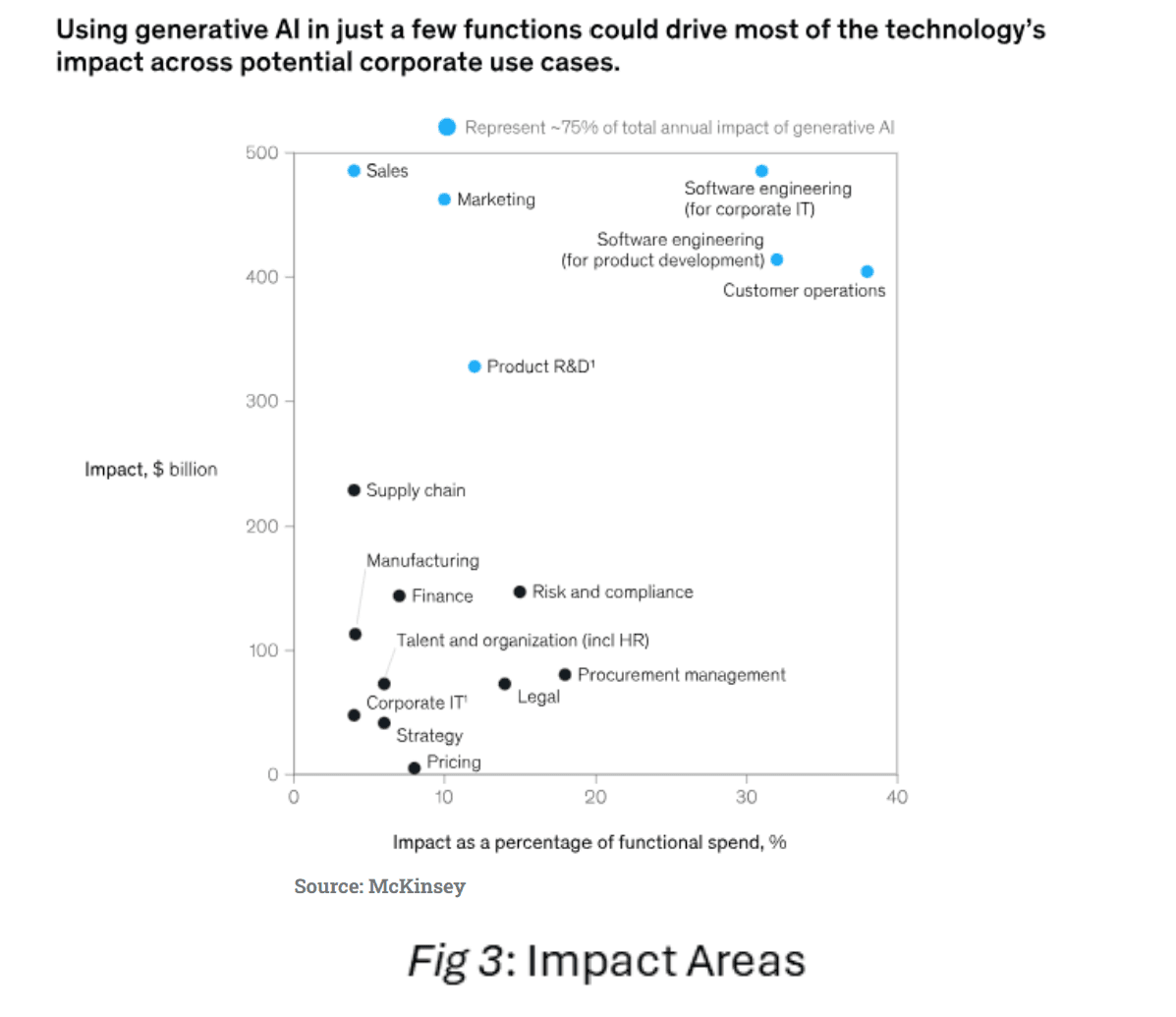
As investments continue, there are many use cases where accelerated adoption of LAMs could lead to material gains in efficiency, precision and productivity for organizations, impacting both their top and bottom lines.
The impact of generative AI action models is being felt across vertical domains including supply chains, manufacturing, finance, risk and compliance along with functional areas in marketing, customer operations, software engineering and sales.
The resulting economies of scale, scope and innovation promise significant gains for industry.
For any queries, please reach out to us atpractice@ribionic.com